


KindCarbon KindCore

Innovation overview and development
Overview of the product
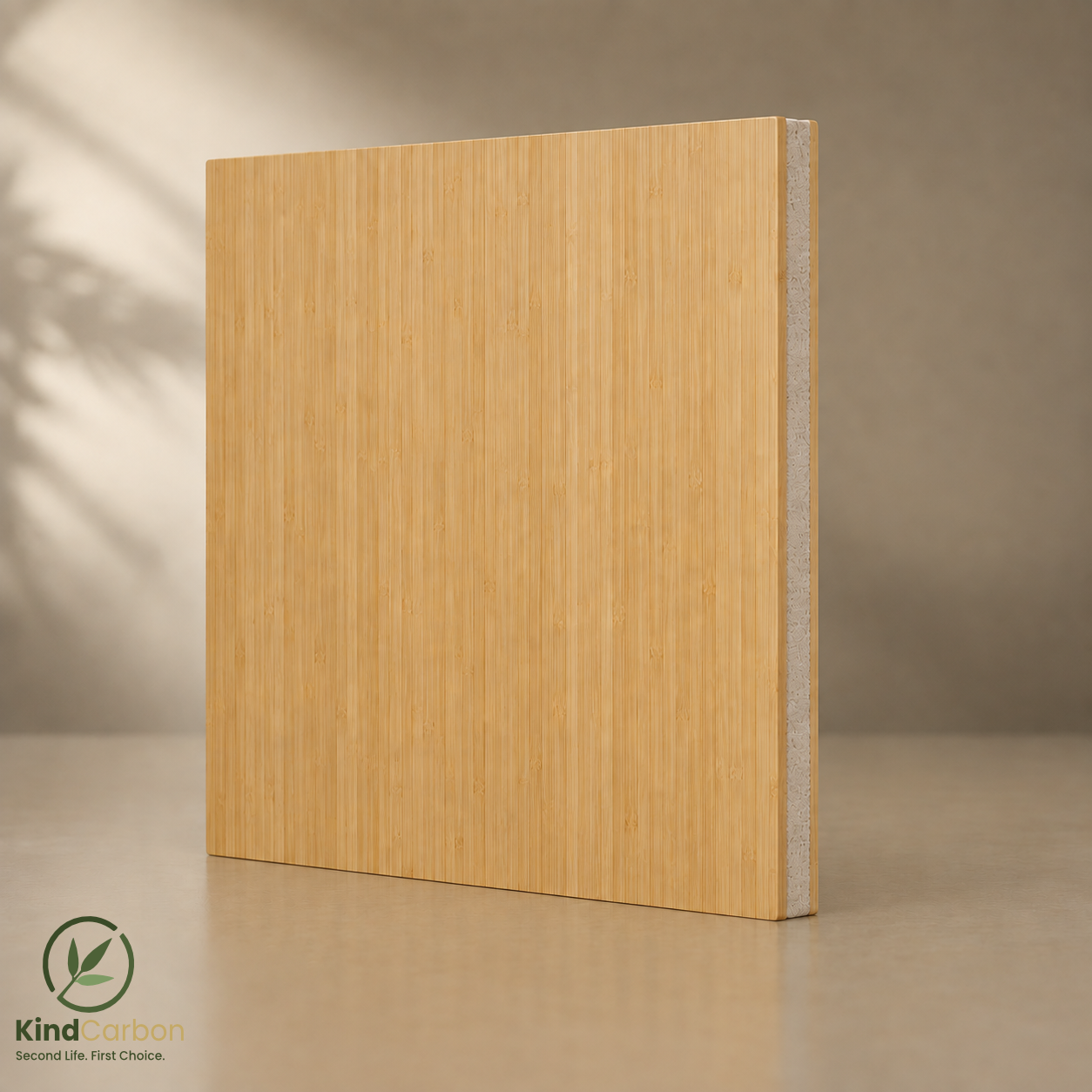
KindCore is a sustainable building material developed by Circular Ceilings/KindCarbon, combining reclaimed ceiling tiles with a potentially carbon negative bamboo face on either side to create a robust, circular-economy alternative to virgin timber or composite board. It forms part of a broader KindCarbon product range — including ceiling tiles, wall panels, shelving, and printed/painted tile finishes — built around the principle of diverting waste ceiling tiles from landfill and giving them a second life as a high-performance interior material.
By using reclaimed tiles as the core and finishing with a durable bamboo face, KindCore addresses both the embodied carbon problem in interior fit-out (reclaimed core reduces virgin material demand) and the performance expectations of specifiers and contractors (bamboo face gives the strength, finish quality, and workability of a conventional board product).
Similar to FSC, the reclaimed tiles can be traced back along their lifecycle, from donor sites and in some cases their original manufactured date. This product passport continues on the boards journey to its next life.
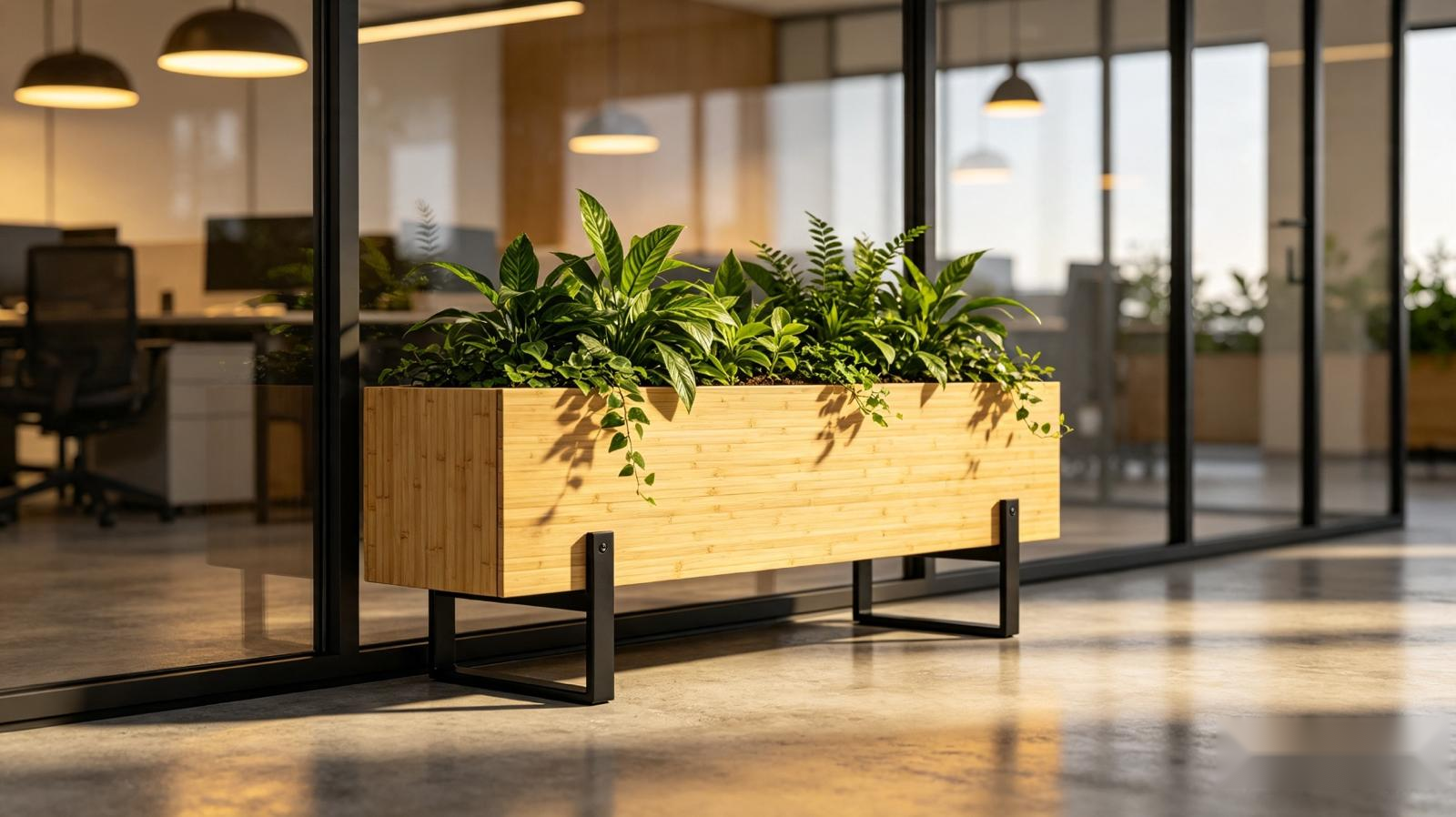
Applications for the KindCore board include, joinery, furniture, partitions, even doors.
Produced as a sheet material in 25mm and 40mm thickness as standard.
How the new product was developed, including effective collaboration, knowledge transfer and partnership along the project team
The development of KindCore (Patent Pending) has been built on partnership across the supply chain, from raw material sourcing through to manufacture. Ceiling tiles are sourced via Circular Ceilings’ take-back scheme, ensuring a consistent, traceable supply of reclaimed material rather than relying on ad-hoc waste streams. Once collected, tiles are sorted and graded — assessed for quality, age, and suitability — with a first-priority pathway for reuse on the original site, followed by repurposing to other sites where on-site reuse isn’t viable, ensuring the highest-value use is found for each tile before it enters the KindCore manufacturing process.
The bamboo facing and panel assembly is currently supplied by Branch Joinery, a Moso Bamboo UK distributor, in a manufacturing partnership that has allowed KindCarbon to bring the product to a launch-ready stage without the upfront capital burden of in-house production. This is a deliberate phased approach: proving the product and building specifier demand through an established manufacturing partner, with a clear plan to scale production under the KindCarbon brand as volume and funding allow.
Early engagement with specifiers has been a core part of the development process, with strong positive feedback and expressed intent to specify KindCore on a number of live projects once the product reaches launch. This early market validation has run in parallel with ongoing performance testing, with a final set of tests currently being completed. KindCarbon is now seeking grant funding and investment to scale production capacity and complete this final testing phase — reflecting a collaborative, staged development model spanning waste management partners, manufacturing partners, and the specifier community.
How might this product have an influence on the specification
KindCore has the potential to shift specification behaviour in a few ways:
Embodied carbon reporting: As part L, RIBA 2030 targets, and whole-life carbon assessments become standard in tender requirements, a reclaimed-core product gives specifiers a like-for-like substitute they can drop into existing specification categories (board, panel, shelving) without compromising on carbon credentials.
Circular economy compliance: With growing pressure on public sector and corporate fit-outs to demonstrate circular material use (BREEAM, SKA rating, corporate ESG commitments), KindCore offers a tangible, auditable example of reclaimed content — likely to become a preferred or even mandated choice on projects targeting these certifications.
De-risking sustainable choices: Many reclaimed/recycled products are perceived as compromising on performance. KindCore matches or exceeds standard board products on strength, finish, and fire performance, it removes the traditional trade-off that makes specifiers hesitant, potentially making “sustainable by default” a realistic specification position rather than a niche one.
How the product improved productivity in the process and/or quality and performance of the interior system
KindCore has been developed to be a drop-in equivalent to standard furniture boards, meaning contractors and joiners can work with it exactly as they would with plywood or MDF — using the same cutting, sealing, and fixing techniques and tools. This removes any need for specialist training, equipment, or handling procedures, so there’s no productivity penalty for switching to a more sustainable material.
The bamboo facing gives KindCore a consistent, high-quality, predictable finish — comparable to or better than standard board products — and can be further laminated with additional performance or aesthetic finishes as required, giving specifiers the same flexibility they’d expect from conventional materials.
Beyond the board itself, KindCore contributes to productivity and waste reduction at the installation stage. Because panels are supplied prefinished, the product is designed to avoid wet or destructive installation methods, reducing on-site waste and speeding up fit-out. Critically, this also means KindCore panels can be more easily removed intact at end-of-life, allowing them to be reused or reclaimed again in the future — extending the circular economy principle from raw material sourcing all the way through to the product’s next life cycle.