

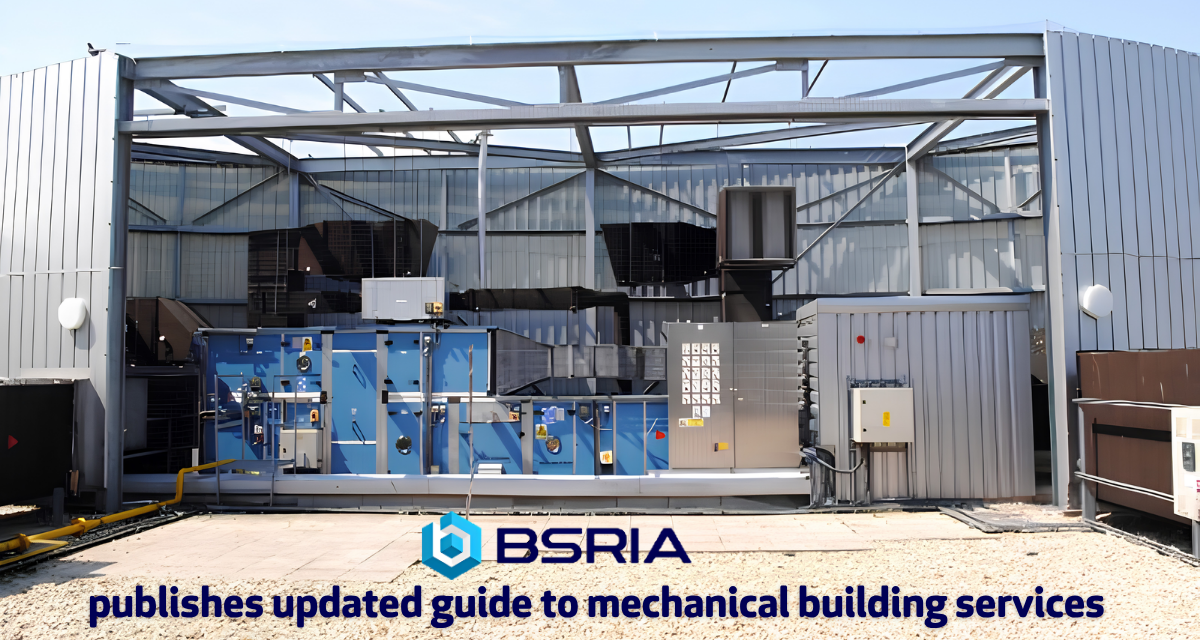
BSRIA has published major updates to its BG 31 The Illustrated Guide to Mechanical Building Services, providing an updated reference for construction professionals who are not specialists in the discipline.
The fourth edition comes nine years after the previous guide and reflects significant changes in regulation and technology over that period. Changes to Part L have increased the focus on energy performance and higher-efficiency building services, while heat pumps and heat networks are playing a growing role in how buildings are heated.
Fire safety also remains a key consideration in the design and installation of mechanical services.
BG 31/2026 brings these areas together with practical guidance on the heating, ventilation, cooling, hot water and control systems found in buildings. It is aimed at a broad construction audience, including project managers, manufacturers and clients who need to understand the systems without necessarily being building services specialists.
Systems and regulation
BG 31/2026 explains the ‘lean, clean and green’ approach to reducing HVAC energy use and carbon emissions, starting with reducing demand through building design before considering efficient systems and low-carbon plant.
The guide reflects the impact of Part L on the specification of higher-efficiency plant, advanced controls and sustainable technologies, as well as the balance between upfront investment and whole-life costs.
Heat pumps and heat networks feature more prominently in the new edition. The guide describes heat pumps as becoming the preferred means of heating buildings and explains their growing use in modern non-domestic buildings and new homes. It also covers low-temperature heating and the principles and operation of heat networks.
Fire safety guidance covers compartmentation and firestopping, smoke and fire dampers, staircase pressurisation and smoke clearance, helping non-specialists to understand how mechanical services interact with a building’s wider fire safety strategy.
Operation and facilities management
The guide also provides a reference for control and building management systems, commissioning and handover, and the running costs of mechanical plant over its working life.
Mechanical services typically account for 15-25% of overall build costs in standard UK commercial and residential buildings, rising above 30% in complex buildings such as hospitals and high-specification offices. The guide also highlights the importance of considering running costs and whole-life performance alongside initial capital expenditure.
It covers ventilation, cooling and hot water systems, as well as how buildings connect to water, gas, electricity and telecommunications networks. Each system is introduced through key points, photographs and diagrams designed to make the principles and operation easier for non-specialists to understand.
David Bleicher, Publications Manager, BSRIA, said: “A lot has changed in building services since the last edition was published in 2017, and it’s becoming increasingly important for people outside the discipline to understand how these systems work.
“While not everyone needs to be a building services engineer, if you’re involved in designing, delivering or managing buildings, you need to understand the basics. Decisions about heating, ventilation and cooling have implications for everything from energy use and running costs to fire safety and occupant comfort.
“The guide is there to make that easier. It gives professionals a practical introduction to the different systems, what they do and how they can impact broader building design, so that they can ask better questions and have more informed conversations with the specialists.”
BG 31/2026 The Illustrated Guide to Mechanical Building Services is available to download here from the BSRIA website.
