


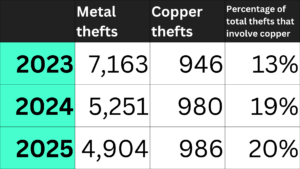
New research has revealed that copper theft is soaring in the UK, despite metal theft declining by nearly a third (32%) overall in the past two years.
The study1, conducted by metals4U, analysed crime data from UK police forces for metal theft and attempted metal theft, and found that the decline in metal-related crimes was consistent across most UK regions and police forces. Despite the decline, thefts of copper rose each year as thieves targeted the valuable metal.
Over the three years in question, copper thefts rose from more than one in 10 (13%) of all metal thefts in 2023, to one in five (20%) in 2025.
Copper prices have reached a record high this year at around $6.53 per pound2. Studies show prices have been steadily increasing in recent years, rising by over $4,000 per tonne between 2023 – 2025 3.
One of the drivers of the surging copper price is the rising demand, partially due to the AI boom, as the material is a key component used to build data centres. While data centres account for just 1% of global copper demand today, investors are increasingly pricing the metal based on expectations and forecasts amidst the AI boom, factoring in years of expected spending on data centres, power grids and transformers4.
Copper can be found fairly commonly, especially in older buildings where copper pipes and electrical wiring are used frequently. Combined with the soaring cost, this makes the metal an attractive target for thieves.
Copper thefts as a percentage of total metal thefts (2023-2025)
Paul McFadyen, metal expert and chairman of metals4U, comments on the findings: “While it’s positive news that metal theft as a whole is decreasing across much of the nation, the steady increase in theft of copper is concerning. Notably because it highlights that thieves are aware, and taking advantage of high demand for the metal caused by chronic global supply shortages, and the AI boom.
“For businesses that either stock large amounts of copper, or require it on a regular basis for jobs, it’s vital that security is kept tight to prevent avoidable theft. It’s also worth considering if other metals can be used as a lower cost, lower risk alternative, such as substituting copper components for lightweight, high-performance aluminium alternatives. Site security should also be increased, with valuable materials such as copper and other metal types either kept off site, or in a secured location.
“Unfortunately stolen metal is often difficult to identify, and very difficult for police to track down. This means that prevention through criminal deterrence is a much more effective strategy for tackling metal crime.”
In addition to the increase in copper theft across the UK, the study revealed some regions have seen sustained increases in the number of metal thefts overall each year.
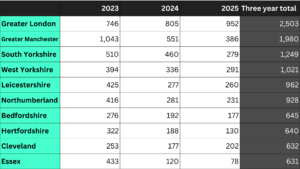
Greater London experienced the highest amount of metal theft, with a total of 2,503 instances between 2023 and 2025. The capital is one of just two regions across the UK that experienced a sustained increase, with thefts rising each year and increasing by 28% over the three-year period. The other region that saw a sustained increase, the West Midlands (16%), experienced a significantly lower rate of growth over the same timeframe.
At the opposite end of the spectrum, Avon and Somerset saw the lowest numbers of metal-related crime5, with 35 instances.
Despite ranking as the region with the second most metal thefts in the country, Greater Manchester saw a significant drop in recorded crimes after 2023. After listing 1,043 thefts involving metal in 2023, the total had dropped to 386 by 2025, a decrease of 63%.
Number of metal thefts by region (2023-2025)
Despite seeing an overall fall in crime numbers during the analysed period, lead was also found to be one of the most targeted metals. Lead is commonly found on building roofs, making it easily accessible for criminals with the right equipment. Lead thefts peaked in 2024, where they made up 6% of all types of metal theft, making it the most stolen individual metal type other than copper.
Other metals meanwhile saw a steady fall in the number of crimes, with miscellaneous metal thefts (including iron, stainless steel and scrap metal) decreasing by nearly half (46%) over the three-year period.
