

A centuries old French vocational training system could provide fresh ideas for improving apprenticeships in England, particularly in specialist trades and craftsmanship.
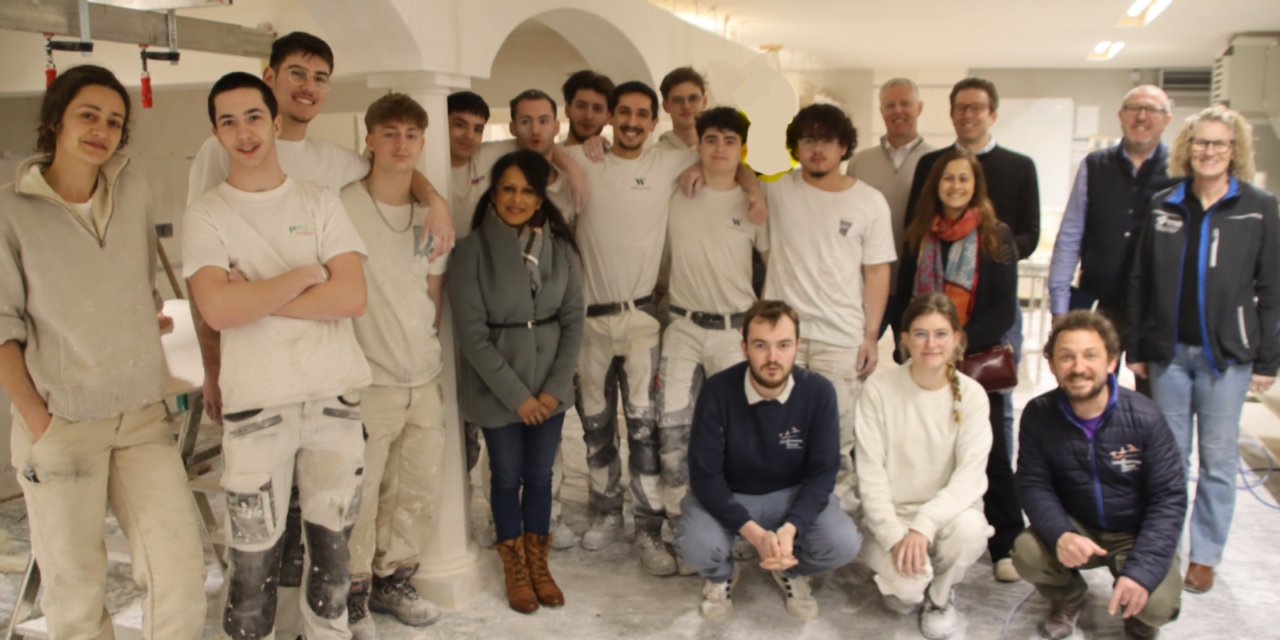
Beena Nana, FIS Head of Skills and Training, and Davinder Jhamat, FIS Chief Operating Officer, joined Jon Riley of Locker & Riley, David Serra of George Jackson and Saint-Gobain Formula on a visit to the renowned Les Compagnons du Devoir et du Tour de France training centre in Strasbourg. The visit explored how elements of the French apprenticeship model might help address the growing skills shortages facing the construction industry.
The visit offered an insight into a long-established training system centred on craftsmanship, mobility and mentorship, while prompting discussion around how elements of the approach could strengthen training and professional identity across the finishes and interiors sector.
Understanding the Compagnons model
Les Compagnons du Devoir et du Tour de France is a French organisation that trains young people through an immersive apprenticeship model combining classroom learning, paid work placements, travel, and communal living. Based in cities across France, including Strasbourg, the organisation is best known for its “Tour de France” programme, where apprentices travel between regions to gain experience with different employers, techniques and working environments.
Unlike the English apprenticeship system, which is largely employer led and locally focused, the French model places strong emphasis on craftsmanship, mentorship, and personal development. Apprentices often spend between three and six years training while living alongside fellow trainees, helping to build a strong sense of community and professional identity.
Comparing the English apprenticeship system
In England, apprenticeships are structured around paid employment and nationally recognised qualifications, ranging from Level 2 through to degree apprenticeships. The system is designed to be flexible and accessible, with funding primarily provided through the government’s Apprenticeship Levy.
However, some critics argue that the English apprenticeship system can deliver inconsistent training quality and often lacks the wider experience and close mentoring associated with more traditional craft-based systems.
Lessons England could learn
The Compagnons model provides several ideas that could potentially strengthen vocational education across England.
One approach could be to expand rotational apprenticeships further, giving trainees more structured opportunities to spend time with a wider range of employers throughout their training, rather than remaining primarily with a single company.
This could broaden practical experience and improve adaptability in specialist sectors such as construction, engineering and heritage crafts.
Another option could be the development of residential training centres, where apprentices participate in intensive short-term programmes focused on technical skills, teamwork, and professional development. Supporters believe this could help improve apprentice retention and create stronger peer support networks.
The French emphasis on long term mentorship could also benefit the England system. More formal master apprentice relationships may help strengthen professional identity while encouraging higher standards of craftsmanship and knowledge sharing.
Challenges of replicating the French approach
Despite these advantages, fully replicating the French system in England would be challenging. The British apprenticeship model is designed around efficiency, employer flexibility, and large-scale accessibility, whereas the Compagnons approach is resource intensive and deeply connected to France’s cultural tradition of skilled craftsmanship.
Potential barriers include the cost of travel and accommodation, employer willingness to support longer training periods, and differing attitudes towards mobility and vocational identity.
Retaining the levy funded apprenticeship structure and adding mobility grants, multi-employer placements, and specialist centres of excellence could bring together the accessibility of the English system with the depth, mentoring culture and craftsmanship focus of the French model.
Reflecting on the visit
On discussing their visit, both Beena and Davinder commented they were hugely impressed by what they saw, describing the Compagnons model as both inspiring and thought-provoking. Seeing apprentices learn, work, and live together created a strong sense of community and shared purpose that stood out to the group.
The immersive environment not only helped develop technical skills, but also encouraged teamwork, independence, discipline, and professional pride. They noted that witnessing the model in action highlighted the potential value of stronger mentoring and community-based learning within the apprenticeship system, adding that it would be fantastic to see elements of a similar approach introduced to help strengthen skills development and raise the profile of vocational training.
As skills shortages continue across construction, manufacturing, and engineering, international training systems such as the Compagnons model may offer valuable inspiration for future apprenticeship reform.
David said: “Seeing the Compagnons du Devoir model in person was truly inspiring. The quality of the facilities was outstanding, but what impressed me most was the enthusiasm, mutual respect and positivity displayed by the young people learning their trade. They demonstrated genuine pride in the skills they were developing.
“My key takeaways for the UK are the high standard of the learning environment, the opportunities for apprentices to broaden their horizons through travel across the country, and the strong recognition of the value of a career as a craftsperson.
“Construction offers exciting and rewarding career opportunities, and I believe it is as attractive a career path today as it has ever been.”
“Les Compagnons du Devoir offers an inspiring example of how traditional craft skills can be taught, valued and celebrated. Combining passion, pride and precision, it creates an environment where young craftspeople develop not only exceptional technical ability but also a deep respect for their trade. It is a model that demonstrates what the future of vocational training in the UK could look like and a powerful reminder of the importance of investing in the next generation of heritage craftspeople”, said Jon.
To read more about Les Compagnons du Devoir et du Tour de France visit: https://compagnons-du-devoir.com/
