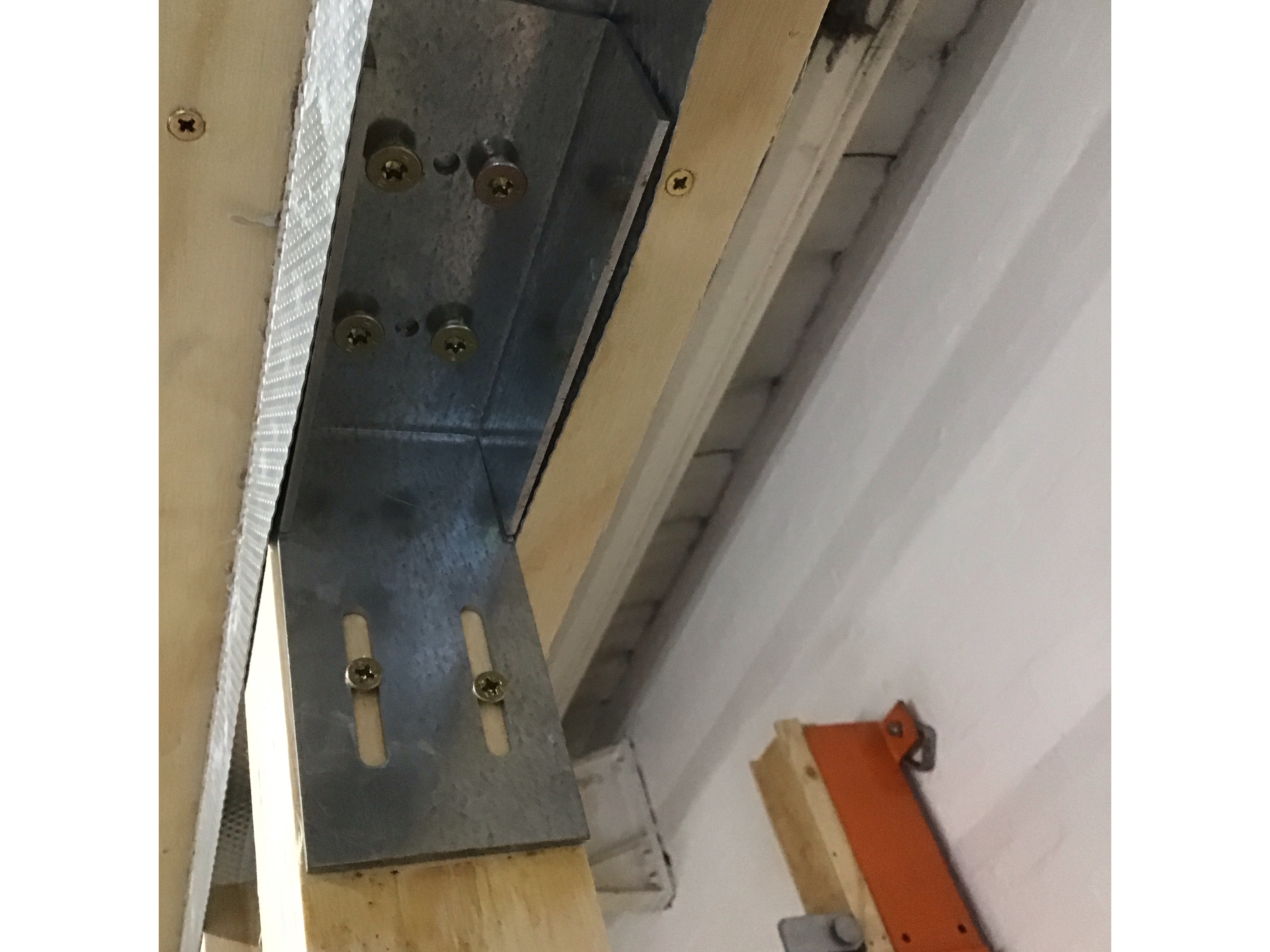
With two projects that didn’t go as planned, Betan decided to make some changes – the result: B-Post.
We hear from John Walker, Business and Compliance Manager at Betan on the reason behind the development and how projects will benefit from its use.
Every contractor has a story about a project that went wrong. For us, there were two – and they became the turning point in how we looked at our installations, our industry, and ultimately how we approach partition wall builds in future.
On those projects, the same issues surfaced again and again: openings for heavy doors, service penetrations, and the co-ordination between the two. The root causes were always the same – poor coordination, unclear responsibilities, and design details that didn’t quite work in reality.
While we couldn’t speak for third-party trades, we knew our own installations were sound. The problem was that too many questions were left unanswered – parts of the build fell outside tested details, and when we raised these design gaps, the response was often resistance. Designers were reluctant to deviate from accepted details, even when those details were little more than judgements which weren’t co-ordinated with the needs of other trades, or the standards they were working to.
“It was a harsh lesson, and it forced us to confront a
bigger truth: the industry just isn’t joined up.”
While manufacturers test their systems in isolation and identify limitations, designers often make assumptions without understanding these limitations. Contractors do their best with what’s on the drawings, but ultimately installers are so overwhelmed by the complexity of the details and conflicting guidance that they can’t help but fail.
It was clear that different products were coming with competing requirements and standards that don’t talk to each other. The result? Workarounds, compromises, and ultimately defects. This realisation was the seed that grew into Betan. If the solutions didn’t exist, we decided we would create them.
The first step was testing. We built a portable test rig so we could take compliance to site – proving how partitions actually performed under strength and robustness tests to BS 5234-2:1992. One project was on the brink of a full decant, strip out and rebuild, but onsite testing demonstrated compliance, and not a single remedial was required. That experience showed us the value of evidence over assumption.
The second step was product development. We turned to one of the industry’s biggest recurring headaches: openings for heavy doors, service penetrations, and the co-ordination between the two. The default answer had long been hot rolled steel posts – heavy, costly, carbon-intensive, and rarely tested within the wall systems they were being forced into. We refuse to accept that as “best practice.”
That’s how the B-Post was born. A patented engineered LVL timber post system, which sits neatly within the partition cavity, protected by plasterboard linings. It’s light enough to be handled by one person, strong enough to carry doors up to 130kg, fire tested to 60 minutes, and supplied in simple kit form. Crucially, it reduces defects by being installed at first fix by Dryliners – no extra trades, no awkward workarounds, no costly delays. And with a fraction of the embodied carbon of steel, it’s better for the planet too.
What began as two painful projects that nearly drove us out of the construction industry has become a mission: to Repair, Refine, and Reform how we deliver drywall. The B-Post isn’t just a product – it’s the embodiment of lessons learned the hard way, and proof that better solutions do exist
Visit https://betan-solutions.co.uk/ for more information.