

Circular Glass Recycling
Innovation overview and development
Overview of the sustainable innovation
As part of the façade replacement works, all existing glazing was removed and replaced with new systems. Recognising the opportunity to maximise material recovery and support circular economy principles, Collins worked closely with May Glass to ensure the removed glazing was recycled back into the glass manufacturing supply chain, rather than being disposed of as waste.
Using a specialist glazing robot, the existing glass was carefully removed to minimise breakage, enabling it to be collected, processed and remanufactured into new glass products.
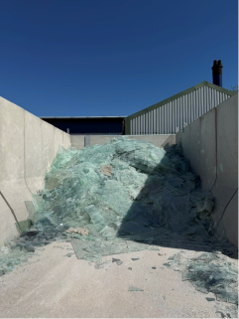
Through this initiative, 65 tonnes of glass were successfully recycled, diverting a significant volume of material from landfill while reducing the demand for virgin raw materials. By returning the glass to the manufacturing supply chain, the project demonstrated a practical circular economy solution that improved resource efficiency and contributed to the project’s wider sustainability objectives.
How the innovation was developed, including effective collaboration, knowledge transfer and partnership along the project team
The innovation was developed through early collaboration between Collins, the specialist glazing contractor and May Glass Recycling to establish a closed-loop recycling process, demonstrating how façade replacement projects can retain high-value materials within the construction supply chain.
From the outset, regular coordination meetings were held to plan the sequence of works, manage logistics and ensure the safe removal, handling and transportation of the glazing. The project team also visited the May Glass Recycling facility to gain a detailed understanding of the remanufacturing process, enabling the removal and handling methodology to be aligned with the recycler’s requirements and maximise material recovery.
Close communication between the glazing contractor, responsible for removing the glass using a glazing robot, and the builders work contractor, responsible for transporting the glass to the lifting beam for safe removal from the building, was essential. This collaborative approach ensured the glazing remained suitable for recycling throughout the removal process.
Knowledge gained during the project was shared across the delivery team, improving understanding of circular economy principles and demonstrating how careful planning and collaboration can enable high-value materials to be recovered rather than treated as waste.
A key lesson from the project was the importance of identifying recycling and material recovery opportunities at the earliest stages of design and construction. Early engagement with specialist contractors and the recycling facility allowed the team to develop a practical, efficient and replicable process that can be applied to future façade replacement projects, supporting greater resource efficiency across the industry.
The use of new technologies, processes products or techniques or novel uses of existing ones
The innovation was the development of a practical closed-loop recycling process for façade glazing that delivered environmental benefits without increasing the cost of the façade replacement works. It enabled existing glass to be recovered and returned to the glass manufacturing supply chain.
The project combined the use of a specialist glazing robot with carefully planned removal, handling and logistics to safely remove the glazing while minimising breakage and preserving the quality of the glass for remanufacture. Early collaboration between Collins, the specialist glazing contractor and May Glass integrated the recycling process into the construction programme from the outset, demonstrating a novel application of existing technologies and techniques.
The approach also delivered commercial benefits. As the glazing required safe removal regardless of its final destination, diverting it to a recycling facility avoided landfill disposal costs, with transport being the only additional requirement. This demonstrated that circular economy principles can be implemented without adversely affecting programme, safety or project costs, while delivering both environmental and commercial value.
How does the innovation provide a more environmentally friendly approach for the industry
The innovation provides a more environmentally friendly approach by retaining high-value glass within the manufacturing supply chain, rather than sending it to landfill or downcycling it into lower-value products. Recovering and remanufacturing the existing glazing reduces the demand for virgin raw materials, conserves natural resources and supports circular economy principles.
Through this process, 65 tonnes of glass were successfully returned to the manufacturing supply chain. Based on published industry estimates, this is estimated to have avoided approximately 20 tonnes of CO₂e associated with the production of virgin glass, while also reducing the environmental impacts of waste disposal.
As the approach can be replicated across future façade replacement projects, it has the potential to significantly reduce waste, increase material recovery and support the construction industry’s transition to a more circular, low-carbon economy.
How does the innovation provide an improvement in social value
This approach supports social value by promoting the responsible sourcing of construction materials. Rather than treating the existing façade glazing as waste, the project retained a valuable resource within the manufacturing supply chain by returning the recovered glass for remanufacture into new products.
This innovation reduces reliance on virgin raw materials and demonstrates responsible material management throughout the project lifecycle. By maximising the recovery and reuse of existing resources, the project supports more sustainable procurement practices and helps strengthen confidence in recycled materials as a viable alternative to virgin products.
How does this innovation influence future specifications to improve sustainability
This project has shown that façade glazing does not have to be treated as waste at the end of its life. By planning for material recovery from the outset and working closely with specialist contractors and the glass recycler, we demonstrated that existing glazing can be successfully returned to the manufacturing supply chain.
This approach could influence future project specifications by including requirements for the recovery and recycling of existing glazing, early engagement with recycling partners, and removal methods that minimise breakage and maximise the quality of recovered materials. Embedding these requirements at the design and procurement stage will help ensure that material recovery is considered from the beginning of a project rather than as an afterthought.
By incorporating circular economy principles into future specifications, projects can reduce waste, lower embodied carbon and make better use of existing resources, while demonstrating that sustainable solutions can also be practical, safe and commercially viable.