

Saible - Digital Parallel Payment Account (DiPPA) 1
Innovation overview and development
An overview of the digital innovation
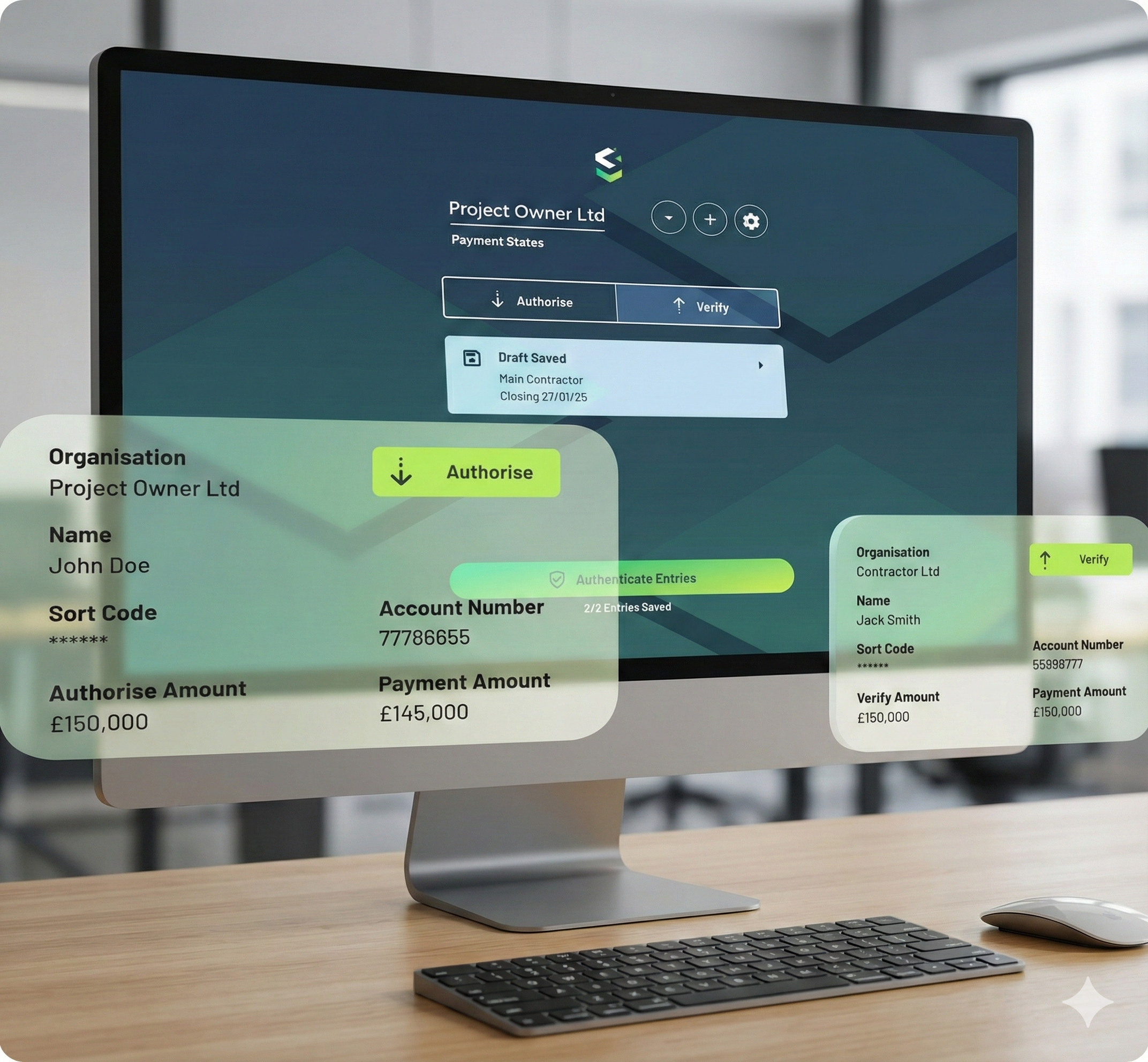
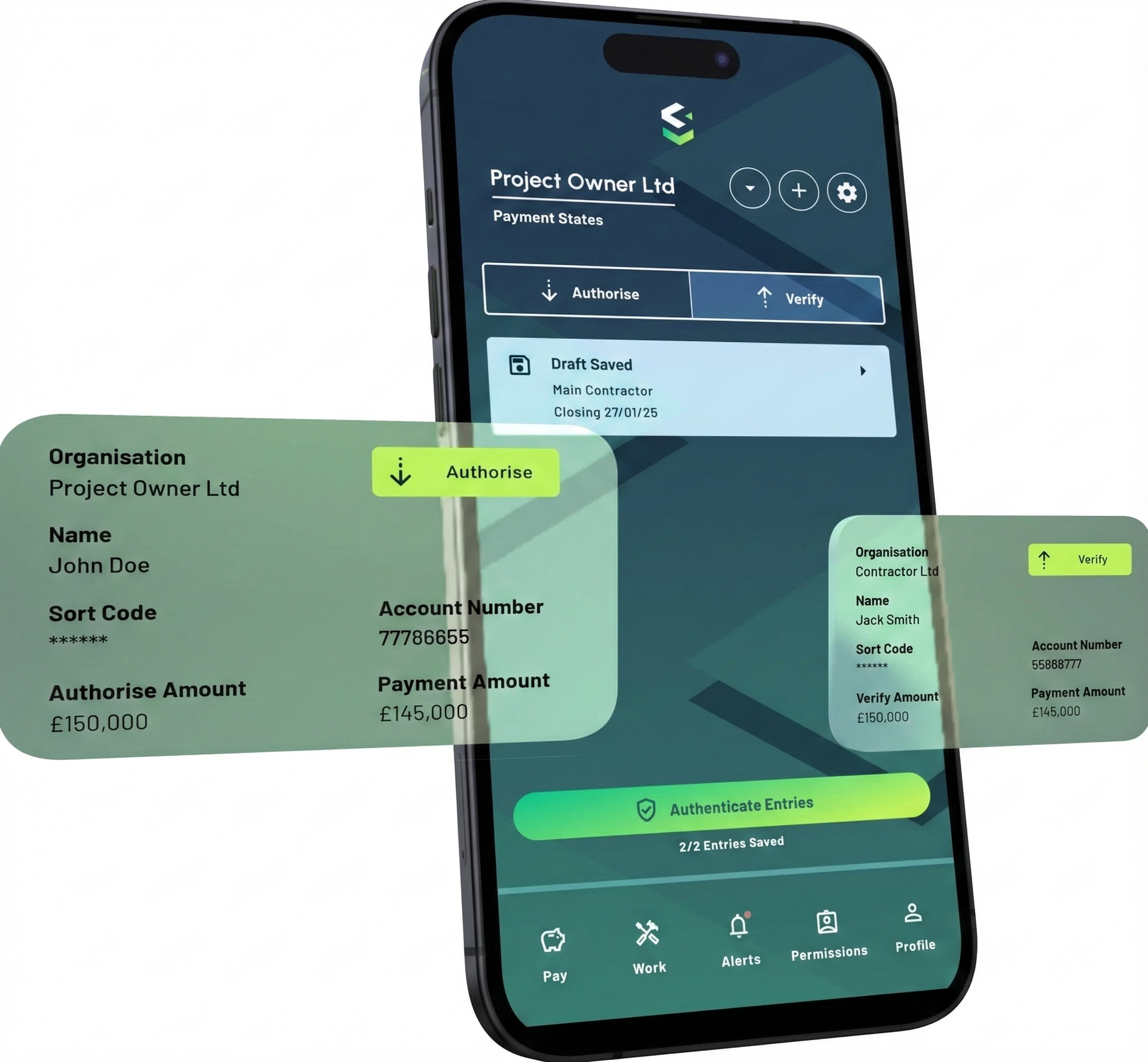
An automated, ring-fenced project bank account that pays the entire supply chain simultaneously. This reduces financial risk and increases security and certainty for everyone involved with the project.
Without a DiPPA, payments flow in series from the “top” of the supply chain (client to main contractor) “down” through the tiers of suppliers and specialist contractors. This creates significant risk of delayed or withheld payments. Insolvencies at the top of the supply chain drain money owed to the entire onward chain, adding further, significant risk.
These risks result in a low trust, love governance, adversarial, stressful project environment.
With a DiPPA, project funds are ring-fenced, paid promptly and simultaneously, and protected against insolvency. This dramatically reduces financial risk, resulting in a more trusting, high governance, more collaborative, and less stressful project environment. It also reduces project costs and delays.
How the digital innovation was developed, including effective collaboration, knowledge transfer and partnership along the project team
The DiPPA has been developed over 3 years, and is Saible’s flagship offering. One of our founders, Dr Tim Whitehill, is a visiting research fellow at Liverpool John Moores University. His research focuses on organisational resilience in the UK construction sector. Product development involved collaboration with legal professionals, quantity surveyors, contractors, clients and other members of the construction ecosystem. The company is funded by private investors, many of whom come from the construction and development industries.
Details on the measurable commercial results
Over £4.5M has been paid out to supply chain companies through DiPPAs so far this year. These specialist contractors and suppliers were paid simultaneously, at the same time as the main contractor.
Even in the situation where a main contractor faced insolvency, payments to the supply chain continued.
How does this innovation improve processes
Parallel payment transforms the current adversarial payment process to be much more collaborative. Without a DiPPA, payments flow in series, from the client, through the main contractor, and then through the supply chain. This is unreliable and slow, creating risk for all concerned. Disputes are frequent, and often spurious, because a dispute creates a convenient excuse to delay or withhold payment.
In a parallel payment scenario, the money is held in the project’s account before being released to everyone directly. This dramatically reduces the incentive to create spurious disputes – because the customer only gets paid when the supplier gets paid.
How might this innovation influence the specification
If a DiPPA is specified at the outset, suppliers can quote with confidence that they will be paid promptly. This provides better margins, and a lower cost project, with fewer delays to programme caused by payment disputes.
Creation of novel internal systems to produce eco-innovation
Companies that survive hand-to-mouth, juggling cashflow and constantly chasing late payments do not have the resources or time to invest in sustainable practices, new technology, or training. Securing reliable cashflow is an essential step to allowing companies to invest in other innovations.