

EPDs Unwrapped
Innovation overview and development
An overview of the sustainable innovation
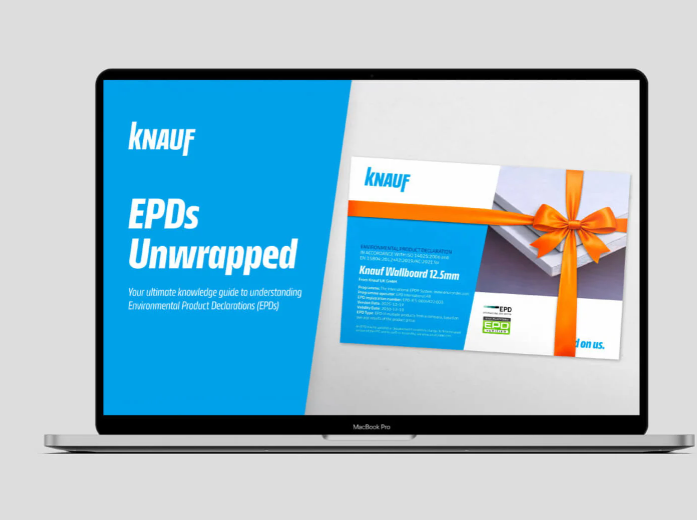
Knauf created EPDs Unwrapped, an educational campaign designed to improve understanding and use of Environmental Product Declarations (EPDs) across the construction sector. The campaign consists of a free eBook and an accredited CPD, developed to help audiences build confidence in interpreting environmental data and applying it in practice.
The resources support a wide range of people across the construction supply chain, from those new to EPDs through to those using them in specification and procurement. They explain what an EPD is, why it matters, and how to interpret one step by step. The aim is to make complex environmental information more accessible, practical and actionable.
The CPD builds on the eBook by offering an alternative learning format and a deeper walkthrough of how to read and use an EPD. Its accreditation by the CPD Certification Service reinforces the quality of the learning and supports formal professional development objectives.
Since launch, the campaign has achieved:
Over 100 eBook downloads
Over 50 CPD requests
Over 350 webinar attendees
40% increase in EPD downloads*
*In the month after EPDs Unwrapped release compared to the month before
The eBook can be downloaded via the link on this page: https://knauf.com/en-GB/sustainability/knauf-gypsum/our-epds
How the innovation was developed, including effective collaboration, knowledge transfer and partnership along the project team
The innovation was developed following the renewal of Knauf’s plasterboard EPDs. During conversations with customers, and while developing new resources such as summary sheets to help with converting EPDs into different units, we identified varying levels of understanding, and a clear need for a simple, accessible educational resource.
The cross-functional project was built on one of Knauf’s core values of Partnership. We worked with our EPD consultant, with our Sustainability Proposition Manager Becky Broadbent, and Head of Process Sustainability and Compliance Manager Richard Gibbons to shape technically accurate grounded in practical industry needs.
The technical expertise and information was bought to life in collaboration with the marketing team, who translated complex information into engaging, user-focussed content through the eBook and CPD. Customer-facing colleagues contributed valuable insight into the areas where support was most needed, helping ensure the final content remained relevant and useful to the market.
The use of new technologies, processes products or techniques or novel uses of existing ones
EPDs Unwrapped addresses a clear industry gap: while EPDs are increasingly available, they are often misunderstood or underused. Knauf’s innovation was to take highly technical environmental data and convert it into a free, comprehensive and easy-to-understand learning resource for the wider construction industry.
The eBook is designed to be accessible to all levels of prior knowledge, making it easier for individuals across design, specification, procurement and delivery to understand how EPDs can be used in practice. While the examples include plasterboard, the principles are transferable across product categories and sectors.
The eBook aimed to translate complex information into clearer, usable information for customers.
How does the innovation provide a more environmentally friendly approach for the industry
EPDs Unwrapped promotes more informed use of verified environmental data. By improving understanding of EPDs, the campaign helps specifiers, contractors and other decision-makers use environmental information more confidently and correctly when comparing products and making choices.
In turn, this supports more robust assessment of embodied impacts and encourages greater demand for transparent, third-party verified environmental information from manufacturers. Better understanding of EPDs can help move decision-making beyond assumptions or headline claims, enabling teams to assess impacts across the project lifecycle and make more informed choices from the earliest stages of design and specification.
Knauf’s approach is rooted in transparency. By combining broad EPD coverage with educational support on how to interpret the data correctly, the campaign encourages more meaningful use of environmental information as a tool for reducing impact.
How does the innovation provide an improvement in social value.
The resources provide competence and free training, which is an important area of focus within the construction industry following the Building Safety Act, increasing people’s knowledge and providing a free resource that anyone in any level of their career can use to develop their skills.
By removing cost barriers and translating complex technical information into clear, usable guidance, Knauf is helping to widen access to knowledge that is increasingly important in modern construction. This supports professional development, informed decision-making and greater confidence across the supply chain.
It can help responsible procurement of materials by giving people the information to make better choices when specifying building materials.
How does this innovation influence future specifications to improve sustainability
By helping people understand what EPDs are, how they work and what their data means, EPDs Unwrapped supports better use of environmental information in future specifications. It encourages a lifecycle-based approach to decision-making and helps users move beyond selecting products based on a single figure without understanding the context behind it.
Knauf want to encourage greater scrutiny of sustainability claims, prompting users to look for robust, verified data and to question claims that are not supported by credible evidence. In doing so, it helps shift environmental information from being treated as a compliance exercise to being used as a practical decision-making tool.
Knauf are helping to move environmental data beyond a compliance checklist and ensure it becomes a practical tool for specification and open sustainability conversations.