


Fire Rated Junction (FRJ) Guide

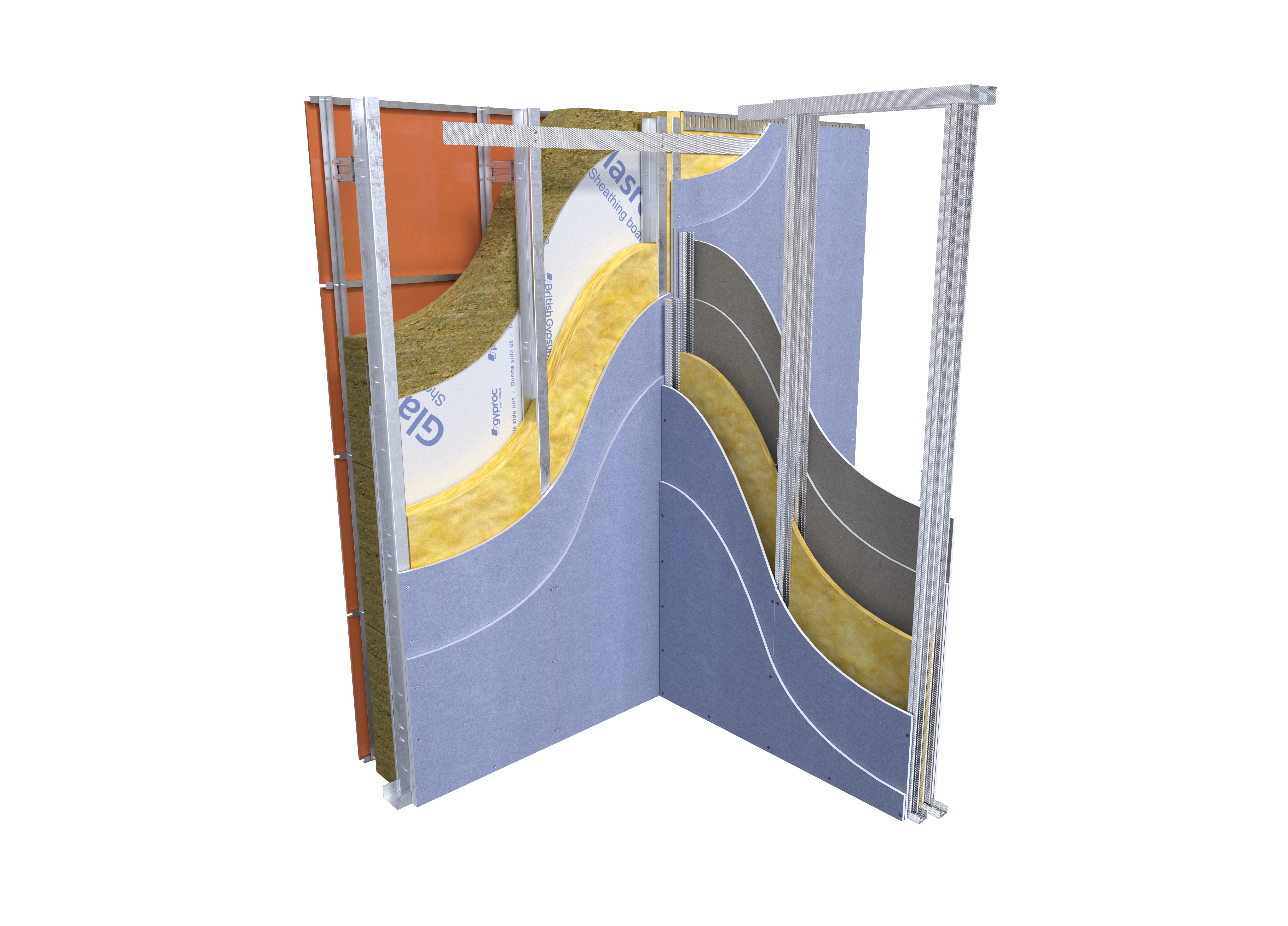
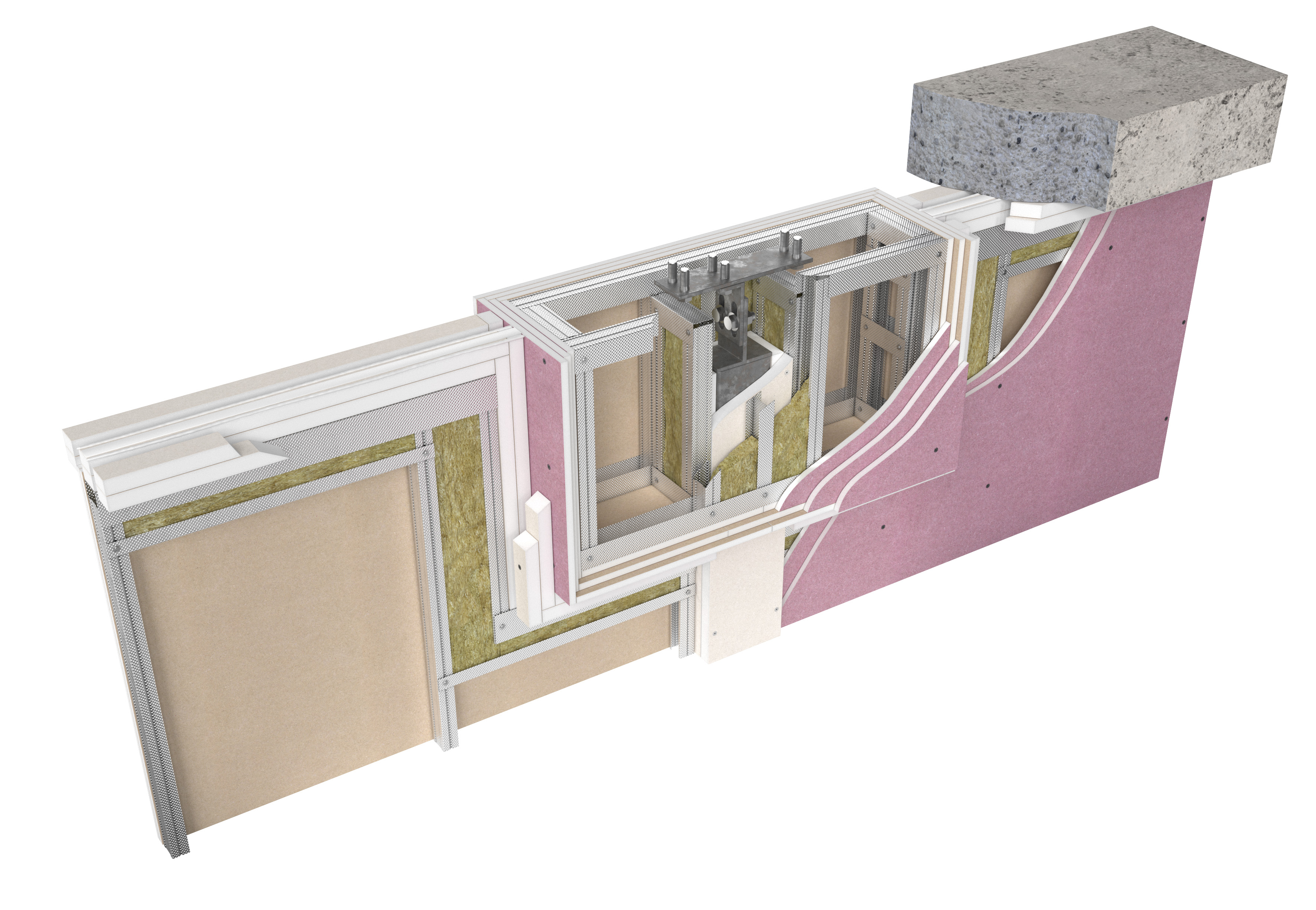
Innovation overview and development
An overview of the product
Fire Rated Junctions (FRJ) is an industry-first, evidence-based best practice guide that addresses one of the most significant yet overlooked challenges in passive fire protection: the performance of fire-rated junctions where walls, ceilings, structural steel and other building elements meet.
While UK building regulations require individual systems such as walls and ceilings to be fire tested, there has historically been no standardised method or legal requirement to test how these systems perform together at their junctions. As a result, designers and contractors have often relied on inconsistent guidance, engineering judgement or on-site assumptions, creating variability in construction quality and introducing unnecessary risk to fire compartmentation.
Developed by British Gypsum, the FRJ guide closes this long-standing evidence gap through one of the most comprehensive programmes of fire testing ever undertaken for drylining junctions. Following a year-long programme of large-scale testing, it provides validated, evidence-based solutions for the most common fire-rated junction details, giving architects, specifiers and contractors confidence that these critical interfaces have been tested under realistic fire conditions.
By replacing assumption with proven performance, the Fire Rated Junctions guide establishes a new benchmark for evidence-led specification, improves consistency across projects and supports safer, more resilient buildings.
How the new product was developed, including effective collaboration, knowledge transfer and partnership along the project team
The Fire Rated Junctions project was developed in direct response to feedback from architects, contractors, installers and specifiers, who consistently identified uncertainty around fire-rated junction detailing as a key challenge. Existing guidance lacked consistency, while no recognised test methodology existed to validate many of the critical interfaces found in modern construction.
British Gypsum brought together a multidisciplinary team of fire engineers, technical specialists, system designers and innovation experts to develop a practical, evidence-based solution. Customer insight shaped the testing programme, ensuring it focused on the junctions most commonly encountered on site and those presenting the greatest specification challenges.
Working collaboratively with accredited UKAS testing laboratories, including Warringtonfire and the Building Test Centre (BTC), the team developed new testing methodologies by adapting existing fire resistance standards to assess junction performance where no recognised test methods previously existed.
The programme delivered an extensive portfolio of full-scale fire tests covering partition T-junctions, internal and external corners, partition-to-column interfaces, beam offsets, partition-to-ceiling junctions, profiled deck interfaces and movement joints. Several junction types were tested in multiple configurations and fire exposure directions to provide robust validation across different applications.
Knowledge gained throughout the programme has been captured within the Fire Rated Junctions guide, enabling best practice to be shared across the wider industry. The project not only delivers validated solutions but also establishes a repeatable framework that can support future fire testing, specification guidance and industry standards.
How might this product have an influence on the specification
The Fire Rated Junctions guide has the potential to fundamentally change how fire-rated interfaces are specified across the construction industry.
Historically, many junction details have been designed using generic guidance, precedent or engineering judgement because no tested evidence existed. This innovation enables architects and specifiers to move away from assumptions by selecting solutions that have been validated through rigorous full-scale fire testing.
The guidance provides greater certainty during specification, helping project teams confidently select compliant junction details that maintain fire compartmentation while reducing ambiguity during design review, technical approval and installation.
Beyond individual projects, the programme establishes a new benchmark for evidence-led specification. By demonstrating how critical interfaces can be tested and validated, it has the potential to influence future guidance, encourage wider adoption of evidence-based design principles and support the industry’s continued response to the Building Safety Act and increasing regulatory expectations.
Ultimately, the Fire Rated Junctions guide gives the industry a trusted reference for specifying some of the most vulnerable points within a fire-rated system, improving confidence throughout the design, approval and construction process.
How the product improved productivity in the process and/or quality and performance of the interior system
The Fire Rated Junctions guide improves productivity by removing uncertainty at one of the most complex stages of system design and installation. By providing tested, validated junction details, project teams spend less time developing bespoke solutions, resolving technical queries or seeking alternative approvals, helping to streamline specification and construction programmes.
The guidance also improves installation quality by providing clear, consistent and evidence-based details that reduce on-site interpretation and variability. This minimises the likelihood of improvised solutions, costly remedial works, failed inspections or delays associated with uncertainty around junction performance.
Most importantly, the innovation significantly enhances the performance of the interior system by demonstrating that fire-rated walls and ceilings can maintain compartmentation when connected through realistic construction interfaces. Rather than relying on assumed performance, the guidance provides independently tested evidence that these critical junctions perform under fire conditions, giving designers, contractors, building owners and regulators greater confidence in the integrity of the completed system.
By transforming assumed performance into proven performance, the Fire Rated Junctions project improves efficiency, consistency and safety while helping raise standards across the wider interiors industry.